What is a Moroccan Riad?
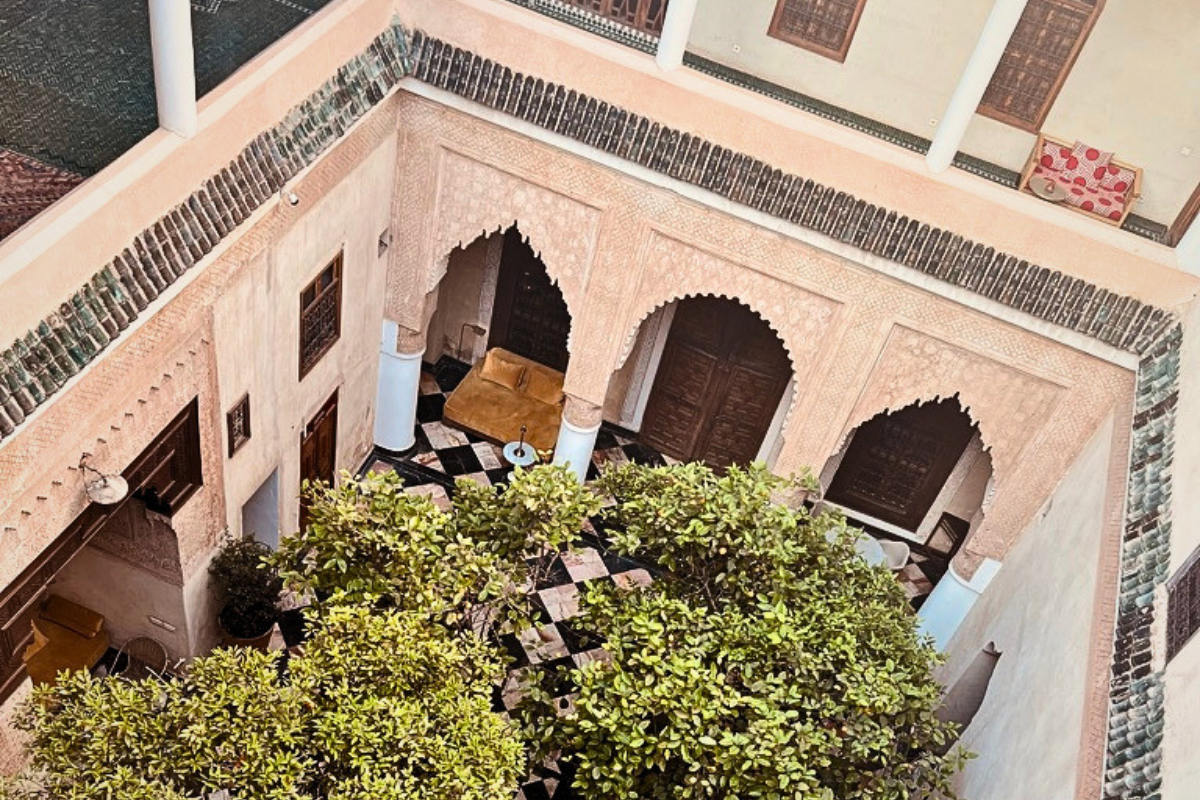
This is my closer look at a Moroccan riad, and why staying in one is unlike staying anywhere else.
Behind the old wooden doors of Morocco’s medinas hides one of the country’s most beautiful architectural traditions. The riad. Not just a house or a hotel, a riad is a story of privacy, beauty, craftsmanship, hospitality, and a way of living that has been shaped by centuries of culture.
Moroccan Riad is a Garden
Many of us today live in apartment blocks or private houses. Our cities are more or less clean, with traffic limited to certain zones. With fertile land stretching around us, our gardens grow freely outside our homes.
But that has not traditionally been the case in Moroccan culture. In Morocco, fertile soil is rare. One third of the country is mountains, another third is desert. With so little arable land, every piece of soil capable of sustaining life was cherished with great care.
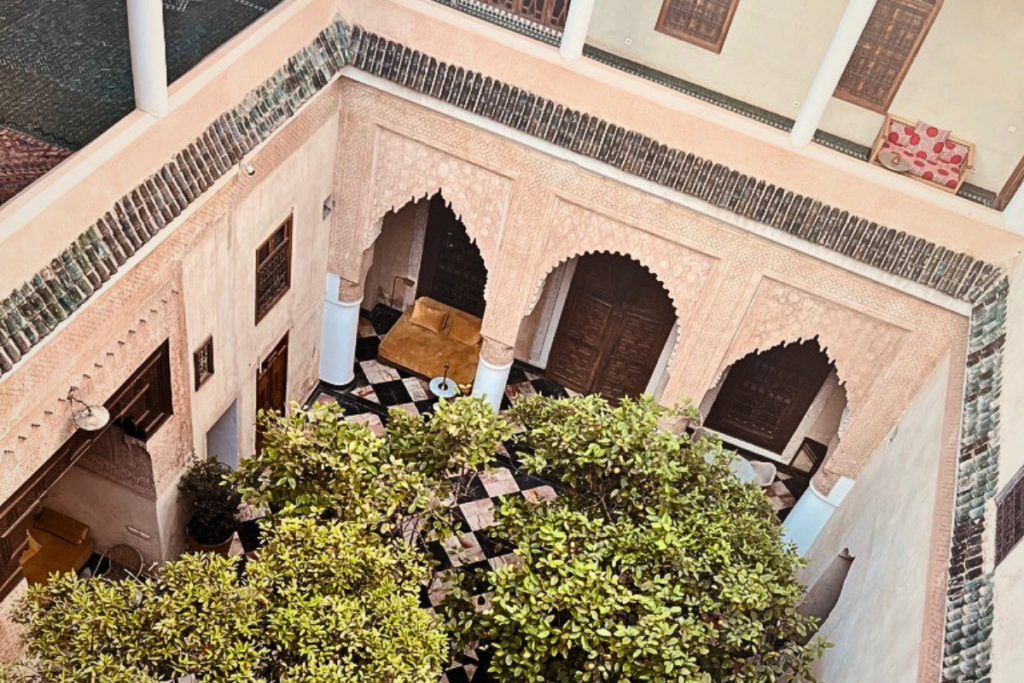
In a city, the only place a house could truly have a garden was in its very heart. A riad’s central garden offered air, shade, and beauty to all four corners of the house. It was the axis around which life revolved.
The word riad actually means “garden” in Arabic. And it is the garden (or inner courtyard) that defines it.
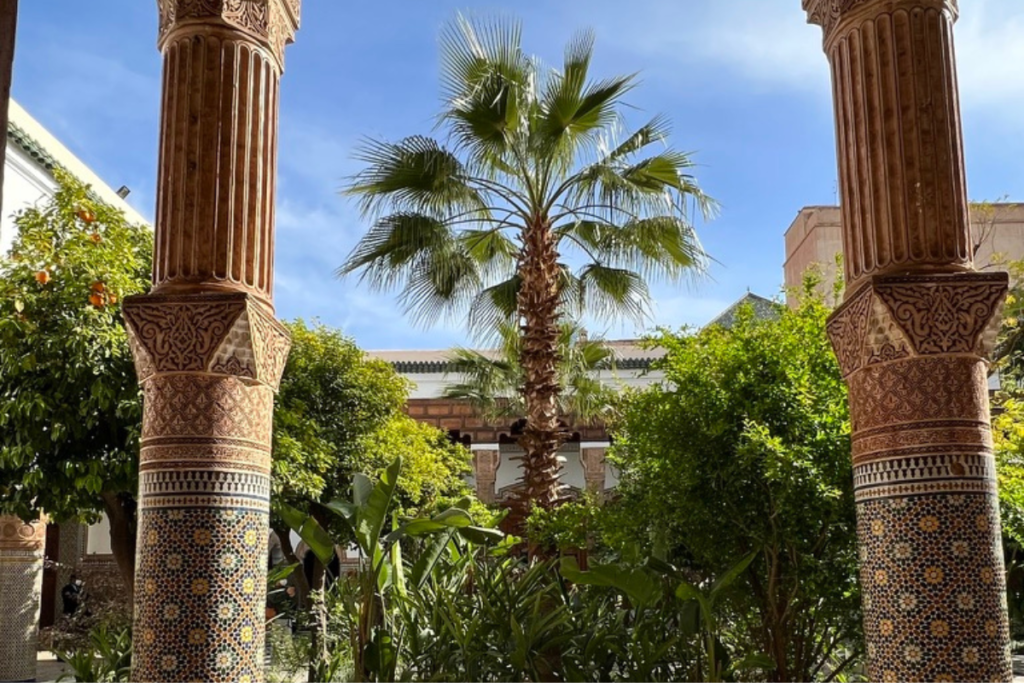
The garden becomes the inward heart of the home. All rooms open toward it. None face outward.
This served two essential purposes:
• It shielded families from the noise, dust, and smells of the medina’s crowded streets.
• It created a private inner world, especially for women and children, away from the intensity of Morocco’s public life.
With that being said, not everyone could afford such a way of living. Riads belonged to the wealthy, the notable, the privileged few. For more than 800 years, they remained symbols of family privacy in Morocco.
Today, many remain family homes, while others have been transformed into unique hotels, intimate restaurants, discreet hammams, elegant galleries, small museums, and much more.
The importance of the riad in Moroccan architecture is visible through its influence on other architectural forms. Larger historical palaces usually consist of many interconnected riads (an example is the beautiful Bahia Palace in Marrakech). And in bigger town houses called Dar, the word riad usually refers only to the central courtyard.
The riad became the fundamental architectural unit of Moroccan architecture.
Its central part can either be an open-air courtyard with an actual small garden or a plunge pool area (most common in Marrakech), or a closed inner hall stretching vertically through all three floors (examples mostly found in Fes).
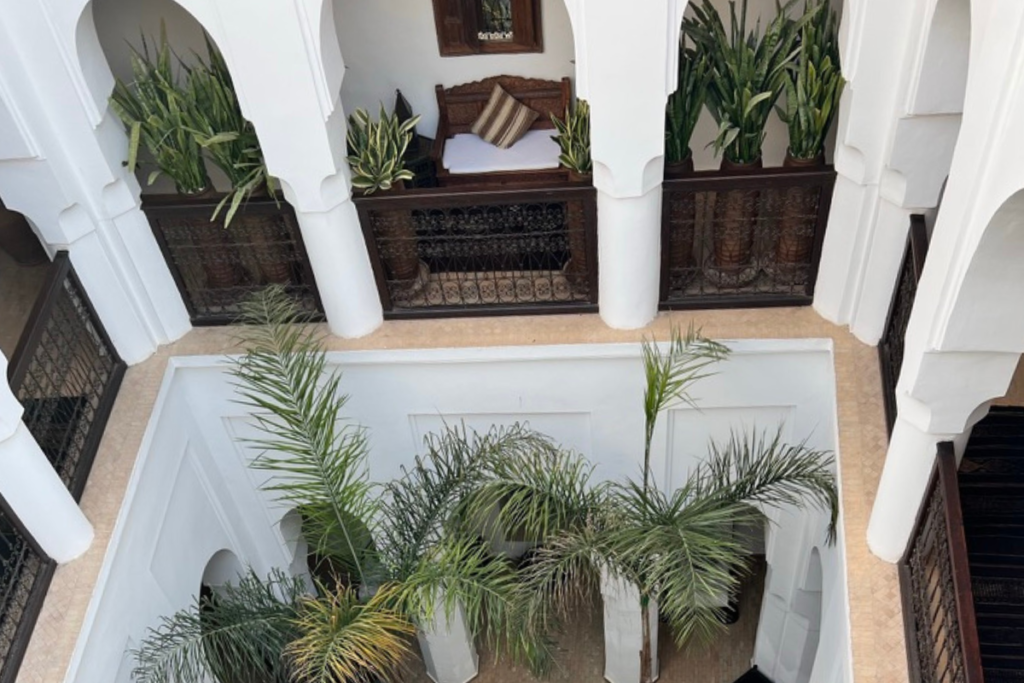
I was trying to find the number of registered riads in Morocco, and that turned out to be a surprisingly impossible Google search. But I did manage to find an estimate for Marrakech medina alone, and the number comes close to 2,000 riads.
And that is all concentrated within an old town covering only 700 hectares (7 square kilometers).
If you become a big fan, just like myself, you might want to pay a visit, or better yet, or better yet, discover more about our journeys through Morocco where we stay in riads.
You can enjoy riads in all major Moroccan cities, but the most famous and elaborate riads are found in Marrakech, Fes, Meknes, and Rabat.
A Riad is More Than a Hotel
Not even the best hotels can compare. Not only because a riad represents an entire way of life.
This may sound like an overused phrase from tourism brochures, but in my very personal opinion, a riad is the highest form of Moroccan hospitality.
In a riad, you are never just a guest. You are a visitor sent by God.
And one treats God’s visitors with due respect.
The silence, slowness, and the scent of incense at the door all remind you that you are entering a special space.
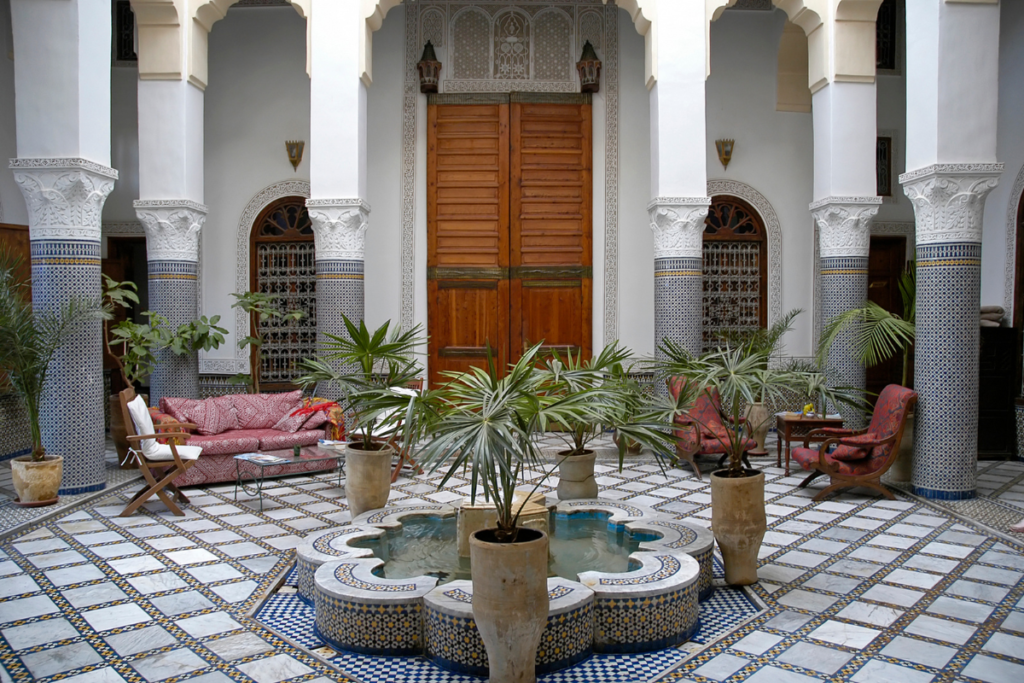
The Design
There are many styles of riads in Morocco.
There are those that are luxurious, with the finest craftsmanship communicating cold elegance. There are others that instantly feel like home the moment you enter. And then there is the entire spectrum in between.
The design always depends on the owners. Their wealth, their taste, their material and color preferences.
Some riads are modern, others traditional. Then there are eclectic ones that combine styles across history and incorporate European influences and tastes.
In most cases the colors, textures, and materials found in riads are part of the larger visual language of Morocco itself.
Some have been, and still are, owned by European fashion designers, artists, architects, and collectors. Their signature can often be seen in the riad’s color palette, furniture selection, art collections, and decorative choices.
WHAT A RIAD IS ALL ABOUT?
Handmade Everything
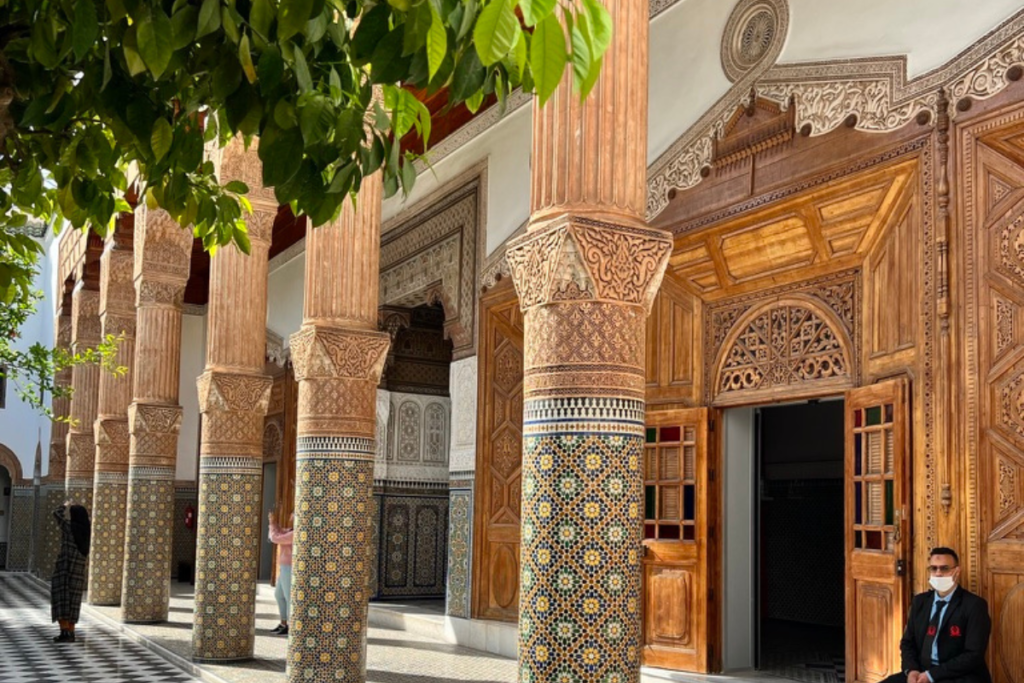
Craftsmanship in Morocco is on an extremely high level, and riads are museums of arts and crafts. Even the modest ones.
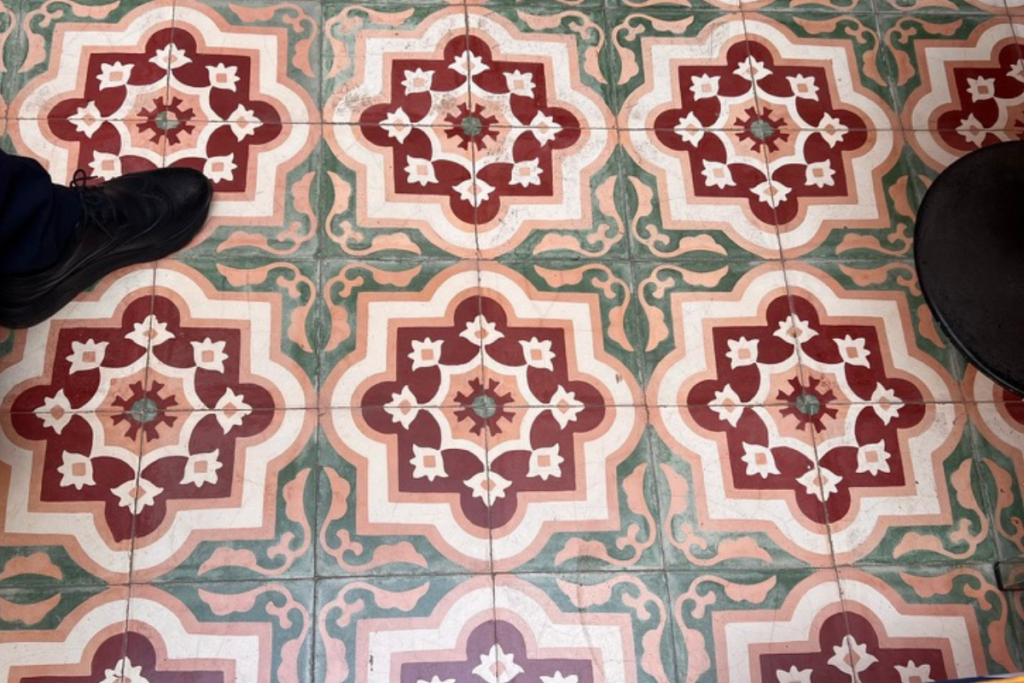
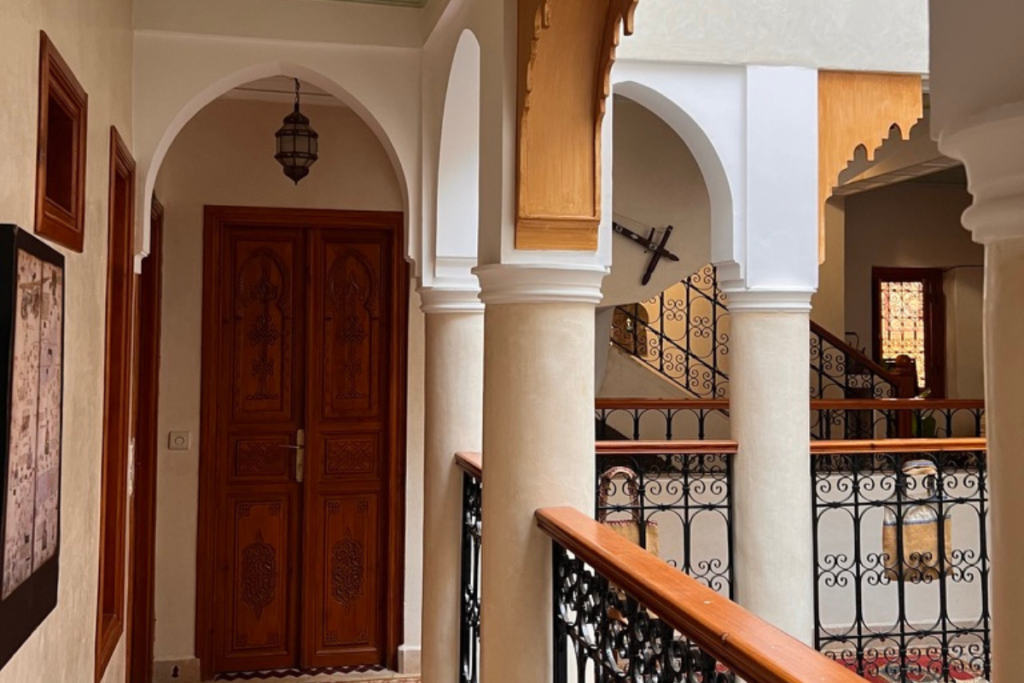
Ceramic tiles covering floors and fountains (and often your bathroom as well), wood carvings, woolen rugs, clay lamps, metal details, carved wooden doors, stained-glass windows…
They will become your favorite style. Immediately.
An immense effort was invested into understanding beauty and bringing only the best to the visitor. And all those objects, made by hand, evoke feelings of depth, respect, and even a subtle feeling of being held.
Warmth is in every fiber of a riad.
The warmth of the hands that made it. The warmth of the welcome that receives you.
Intimate Atmosphere
When a riad is turned into a hotel, it becomes a hotel with authentic atmosphere. And an intimate one.
The building, nestled inside a dense medina, is always relatively small. Everything is close by. Room to room. Patio to courtyard. Bed to bed.
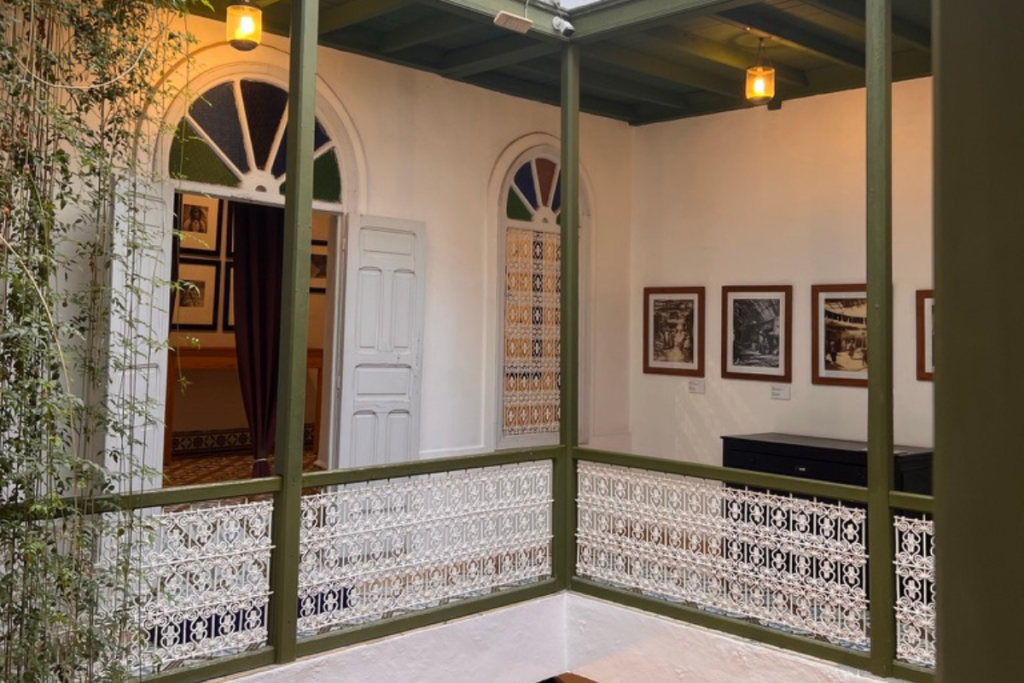
So you can expect to hear everything.
Soft footsteps on the patio rug. Steps on the stairs. Whispering conversations on the rooftop or near the entrance door. Your neighbors talking quietly about their day late into the evening.
An unwritten rule of riad living is that people naturally avoid speaking loudly. This does not mean you should tiptoe around all day, but you will notice that every member of the staff moves almost like a ghost, quietly gliding over polished zellige mosaic tiles.
Number of Rooms
Riads are rarely big.
If the owner was wealthy, they would connect neighboring riads rather than build one large structure. So a riad usually has somewhere between 3 and 12 rooms. The majority have only 5–6 rooms.
Main Courtyard
The main courtyard is a place where three elements meet.
Water. Plants. Craftsmanship.
It almost always has a fountain or a small plunge pool, some greenery (from banana trees to simple plants in ceramic pots), and floors covered in ceramic mosaics called zellige.
The plunge pool is usually not heated, so in a desert climate with colder nights, the water can be quite cold.
Kitchen
The kitchen is usually located somewhere close to the main courtyard.
It is often quite small and mainly used by the staff when preparing your breakfast, dinner, and Moroccan tea throughout the day.
Roof Terrace
The kitchen is usually located somewhere close to the main courtyard.
It is often quite small and mainly used by the staff when preparing your breakfast, dinner, and Moroccan tea throughout the day.
This is How You will Experience a Riad
Arrival
On foot. There will usually be someone waiting to meet you and help you with your suitcase while guiding you through the medina.
Entry And First Contact
The sound of silence. A sharp contrast to the busy medina street outside the old wooden door.
Courtyard
The heart of it all. This quickly becomes your social hub.
Staircases
In older riads, stairs are uneven and narrow. Many times (especially in Fes, where ceilings are higher), the stairs are steeper than what we are used to. You can also forget about elevators.
Rooms
Depending on the owner’s wealth, the design may be more or less elaborate.
All details are handmade, which gives each room its own unique charm.
Rooms are small. Historically, all life happened in the main courtyard, and rooms were simply spaces for sleep.
If you are traveling with a friend, I warmly recommend separate rooms to allow for more personal space.
Beds are usually dressed in luxurious linen and duvets (Moroccan nights can be surprisingly chilly).
There is usually nothing worth looking at outside the riad, which is why windows always face the inner courtyard. This creates peace and calm inside the room.
Bathrooms
Bathrooms are often a real treat. Museum level. Sometimes one feels like moving in and sleeping there.
Surfaces are usually covered either with zellige mosaics or with traditional clay wall plaster called tadelakt.
Most feature a shower, but occasionally you are pleasantly surprised by a bathtub.
Terrace
The terrace is almost more important than the courtyard.
In the evenings, temperatures become pleasantly cooler than on the ground floor.
Terraces often feature a small bar for sunset cocktails and afternoon tea.
How Does A Riad Feel?
My mood instantly changes when I enter through that wooden door. It feels like entering another world.
A world of respect and welcome. I feel cherished.
Sometimes it feels like staying at your grandmother’s house. In the best possible way.
An hour spent in a riad can feel like a night of excellent sleep elsewhere.
But do not expect the insulated experience of a five-star hotel.
Because when you come to a riad, you enter a Moroccan tradition that has welcomed guests for almost a millennium.
And that is a very long time.
⚜️ With Elegant Cultural Tours we are guiding you into the living traditions of Morocco.
Every week I send out a Letter in which I write about the observations of the world, small group travel and our tours. If you would like to receive our Letters, you can Join – sign up form is in the Footer below.
Share:
Topics
- About ECT(6)
- Experiences(1)
- Fascinations(1)
- Morocco(2)
- News(1)
- Observations(1)
- Slovenia(2)
- Tours from Vienna to Venice(1)
- Tours to Cuba(3)
- Tours to Morocco(1)
- Travel(6)
- Workshop Tours(1)
Recent posts